Write wedding vows: The personal vow exchange is the most intimate and powerful moment of your wedding day. Yet, for many couples, the thought of writing them is pure agony. You face the blank page, paralyzed by the pressure to perfectly summarize a lifetime of love in a few short paragraphs.
The resulting vows often fall into one of two traps: they are either too vague (“I promise to always love you”) or too long, rambling, and full of inside jokes that confuse your guests.
The secret to writing heartfelt, impactful vows that move your partner and your audience to tears isn’t poetic genius—it’s structure. By breaking the process down into three manageable steps, you can eliminate writer’s block and ensure your words are delivered with sincerity and power.
Step 1: Reflect and Capture the Emotional Core (The Content Gathering)
Before you write a single, polished sentence, you need to spend time reflecting. This step is about pulling out the raw, specific, and emotional content that will make your vows unique. This is not the writing phase; it’s the interviewing phase. You are interviewing yourself about your partner.
How to Write Wedding Vows That Resonate
The Four Essential Prompts to write wedding vows:
The Origin Story: What is the specific memory, funny moment, or instance when you knew your partner was The One? (Use this as an emotional opening anchor.)
The Character Trait: What tangible character quality (patience, humor, integrity, ambition) do you admire most and rely on every single day? Avoid generic terms like “kindness.”
The Shared Future: What specific, beautiful, or mundane thing are you most excited to do with them in the decades ahead? (E.g., “I can’t wait to grow old and watch you teach our grandchildren your terrible dance moves.”)
The True Promise: What concrete action do you commit to performing? (E.g., “I promise to always bring you coffee in bed on Saturdays,” not just “I promise to be loyal.”)
The Detail Difference: Specificity is what makes vows authentic. Instead of saying, “You are a great listener,” say, “You were the first person to truly listen to me when I struggled with my career, and you helped me find my way back.”
Step 2: Structure and Draft with Intention (The Formula)
Now that you have your core content, you need to organize it into a powerful flow. A well-written vow should follow a clear template, making it easier for you to deliver and easier for your audience to follow. Aim for 150-250 words (1.5 to 2 minutes maximum).
Write Wedding Vow Outline Template:
Part A: The Acknowledgment (Opening Hook): Start with an emotional statement about your partner or the moment. (1-2 sentences)
Example: “My darling [Partner’s Name], standing here today, I realize my whole life has been leading up to this exact moment.”
Part B: The Love Story/Gratitude: Share the specific memories or qualities you captured in Step 1. This is the “why” behind your promises. (3-4 sentences)
Example: “I fell in love with your endless laughter and your unwavering focus on helping others. You make me feel seen, supported, and challenged to be better.”
Part C: The Promises (The Core): Use clear, declarative “I promise to…” statements. Vary the tone—include serious, profound promises and a few lighthearted ones. (3-5 sentences)
Example: “I promise to be your loudest cheerleader and your softest place to land. I promise to keep dating you and always make sure the wine fridge is stocked.”
Part D: The Declaration (Closing Statement): A clear, powerful closing statement that affirms your commitment. (1 sentence)
Example: “I love you, I choose you, I am yours, forever, starting now.”
Word Choice and Tone: Write your wedding vows in your own natural speaking voice. If you don’t typically use flowery language, don’t use it now. The authenticity will resonate far more than forced poetry.
Step 3: Practice, Print, and Deliver with Confidence (The Presentation)
Even the most beautiful words will lose their impact if they are delivered poorly. This final step is all about presentation, flow, and connecting with your partner.
Practice with Feeling, Not Memorization: Read your vows out loud, focusing on where you pause for impact and where you look up. Crucially: DO NOT attempt to memorize them. The fear of forgetting will paralyze you.
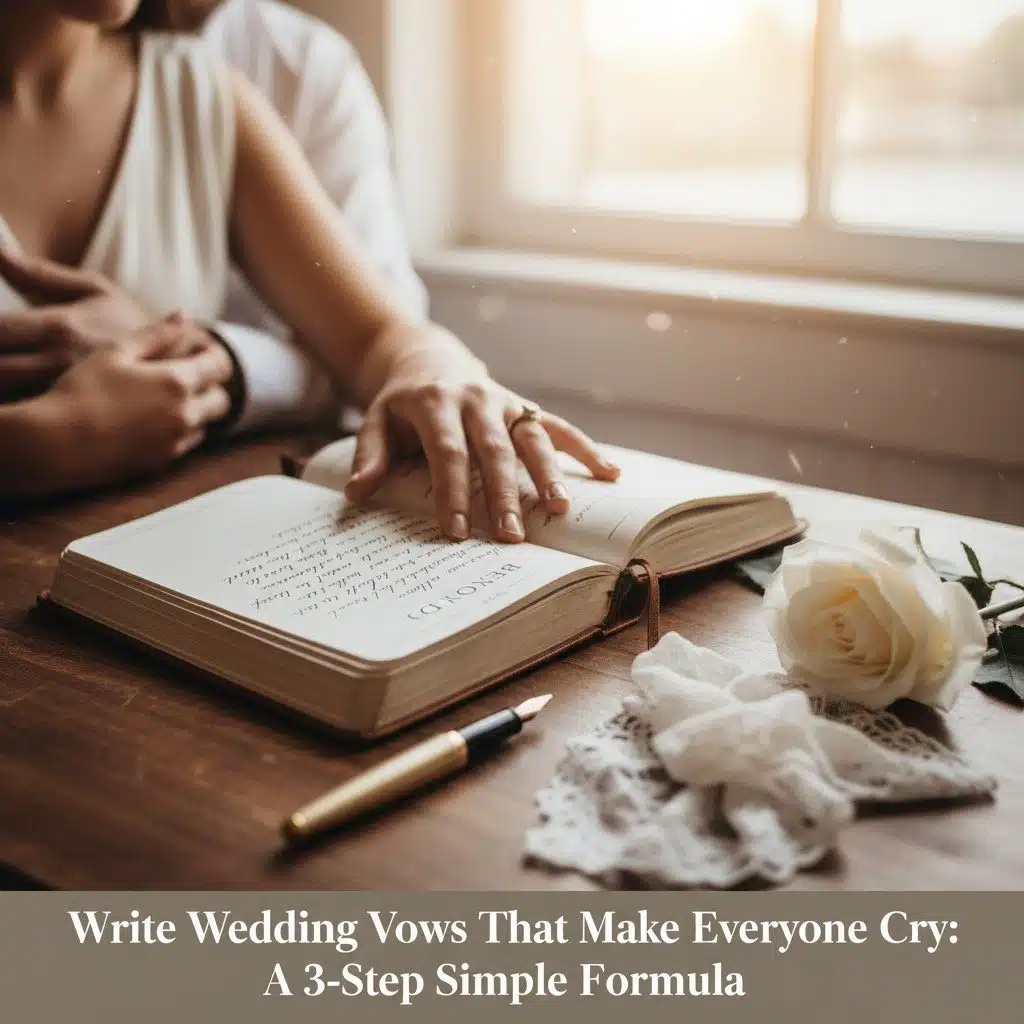
The Vow Book Solution: Ditch the phone. Invest in a pair of attractive vow books or print your vows onto elegant cardstock. This looks much more intentional in photos, prevents technical glitches (dead battery), and gives you a tangible memento.
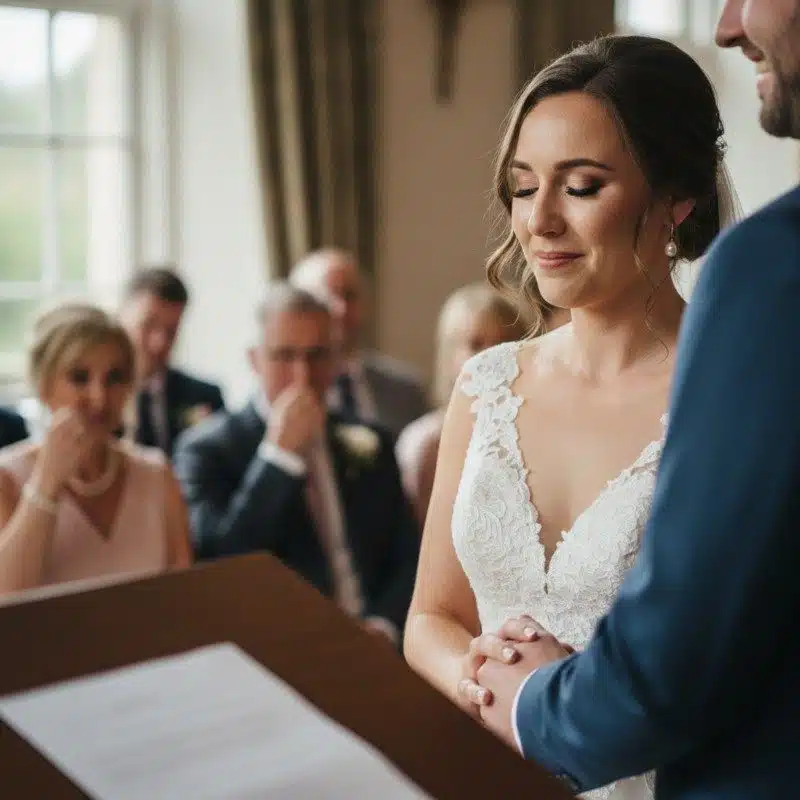
Focus on Connection: During the ceremony, practice looking up at your partner after every few lines. This maintains the intimacy of the exchange. Don’t worry about the audience—your vows are a conversation between the two of you.
By using this 3-step formula, you turn the daunting task of vow writing into an empowering act of reflection. You get to the heart of what you want to say, structure it for maximum impact, and deliver it with unwavering confidence.